Once a month, St. Mark’s holds a worship service at a local memory-care assisted living center. We bring communion and sing hymns, say the Lord’s Prayer and the Collect for Purity. Each month, I invite people from St. Mark’s to join us: usually there are four or five people from St. Mark’s there. When people consider coming for the first time, the question they ask me is usually, “Do you need me, or do you have enough people?” My answer is, “We have enough people, and we need you.”
Running the worship doesn’t really take that many people. I do a nursing home worship by myself every month near my home in Mansfield, so I know it’s certainly possible to do a worship service with just one or two people. But our worship service at Bridges isn’t simply about saying a few prayers and handing out the Bread and Wine. It’s a ministry of presence. It’s a ministry of being the Body of Christ, of all parts needing one another.
Our presence sitting among the residents for weekday worship reminds us that the people that gather at St. Mark’s on Sunday morning aren’t the entire Church: our prayers and our worship connect us to those who cannot be with us as well, whether they are prevented from attending by illness or work or even a soccer game. Our prayers are lifted up for the whole world, those who are able to join us on Sunday morning, and those who can’t. In prayer, we are joined together despite time and distance; we are even joined to those who will never worship with us on Sunday, but who are in desperate need of God’s love.
Our presence sitting alongside the residents reminds them that they are not alone. They are still members of the Body of Christ, not merely people for whom things are done, but people who do things -- people who pray, who worship, who lift up those in need and share God’s love. Even now that they are no longer able to volunteer to run the Easter potluck or the stewardship campaign, they remain equal members of the Church, because no member of the Body can say to another, “I don’t need you.” We sit alongside one another, because before God all are equally welcome and loved. We receive communion together, because we are all equally in need of God’s grace and salvation.
In this busy and hectic world, where we all have to-do lists that stretch to the horizon, efficiency points us toward sending only as many people as might be required to lead the worship -- a priest or a lay eucharistic minister, perhaps. But while worship would be accomplished efficiently, our ministry would be diminished. Being present just for the sake of being present makes a difference -- for both us and our brothers and sisters in the assisted living center. Praying alongside one another reminds us all that we are One Body because we share the One Bread.
What do we accomplish? I don’t know that we accomplish a thing: indeed, some of the residents will probably not remember our visit past the evening meal. But we are present to one another, and we remember that Christ is present to us.
“For I received from the Lord what I also handed on to you, that the Lord Jesus on the night when he was betrayed took a loaf of bread, and when he had given thanks, he broke it and said, “This is my body that is for you. Do this in remembrance of me.” In the same way he took the cup also, after supper, saying, “This Cup is the new covenant is my blood. Do this, as often as you drink it, in remembrance of me.” For as often as you eat this bread and drink the cup, you proclaim the Lord’s death until he comes.’ (1 Corinthians 11:23-26)
Thanks be to God.
~ Suzanne
Wednesday, March 25, 2015

Thursday, March 12, 2015
The Power of Prayer

I am sharing today's Devotional from The Upper Room. The author, Monica Andermann, provides thoughts on prayer that reflect some of my own as I have been striving to be more intentional about praying daily during this Lent. The form of the prayer is not what matters. God knows our hopes, fears, and desires. All we need to do is take a few minutes of each day to open our ears, our minds, and our hearts to God, and He will provide answers to our prayers.
"Then you will call upon me and come and pray to me, and I will hear you. " Jeremiah 29: 12 (RSV)
As a person who leans on the Lord daily, it has been my personal experience that no one particular style of prayer is superior or inferior to another. In the past, I have prayed the rosary and offered Novenas at the urging of Catholic friends and family with good result. People of many faiths sometimes utilize prayer beads. The important part of such a practice is that it promotes concentration, commitment, and focus to one’s time in prayer. Certainly, one would expect the more time spent in prayer, the better the result. It’s my opinion, though, that’s not necessarily true.
In today’s devotion, I assert that even a sincere cry of “Lord, help me” is as effective as prayer on one’s knees in church. For me, this has and still continues to be true.
Right now I have moved into my father’s home so I can act as his primary caregiver whiles he recovers from a lengthy illness. What was initially expected to be a temporary situation of a few weeks duration is now going into its ninth month. I am required to tackle the responsibilities of work, caring for my Dad and his home, and caring for my own home and family. Daily, I must make several decisions on how to prioritize and best handle my many tasks. Those are not always easy decisions and though I might like to, I can’t always sit down with my Bible or rosary beads and go into an in-depth meditation to find my answer. Sometimes a cry of, “God help me,” or “Lord, lead me” is all that time allows. Does God answer those prayers? Of course.
While more time in communion with God does allow us to get closer to our Lord, God is not counting the hours and minutes we spend in prayer. We are not required to punch some type of cosmic time-clock until we accumulate enough prayer time to earn God’s response. God knows our heart and God knows our need. Our Lord desires only that we turn sincerely toward him and ask with an earnest spirit open to receive his answer.
Gracious, Loving Lord, Thank you for hearing my prayers. Amen.
- Monica Andermann
Thought for the Day:
Thought for the Day: God hears — and answers — our prayers.
Prayer: Dear Lord, how comforting it is to know that prayer, in any form, is powerful. Thank you for hearing the needs of our hearts. We pray in the name of Jesus. Amen.
Prayer Focus: Those Who Have Given Up On Prayer
The scripture quotation, unless otherwise indicated, is from the NEW REVISED STANDARD VERSION of the Bible, copyright © 1989, by the Division of Christian Education of the National Council of Churches of Christ in the U.S.A. Used by permission. All rights reserved.
Copyright ©2015 by The Upper Room, a ministry of GBOD. All rights reserved.
Monday, March 2, 2015
The Blessing of Unanswered Prayers

"I asked for strength that I might achieve;
I was made weak that I might learn humbly to obey.
I asked for health that I might do greater things;
I was given infirmity that I might do better things.
I asked for riches that I might be happy;
I was given poverty that I might be wise.
I asked for power that I might have the praise of men;
I was given weakness that I might feel the need of God.
I asked for all things that I might enjoy life;
I was given life that I might enjoy all things.
I got nothing that I had asked for,
but everything that I had hoped for.
Almost despite myself my unspoken prayers were answered;
I am, among all people, most richly blessed."
~Attributed to an unknown Confederate soldier
This was the benediction last night to conclude our weekly Lenten study of "Understanding Poverty." The lesson centered around Jesus' statement that "The poor will always be with you." In the Gospels, Jesus tells this to His disciples after He has been annointed with expensive oil by an unnamed woman. The disciples scold the woman, telling her that the oil could have been sold to provide money for the poor. Jesus tells the disciples to leave the woman alone for she is paying Him homage just days before He will die on the Cross. (Mark 14:3-9; Matthew 26:1-13; John 12:1-8)
Jesus, in fact, is referring to an Old Testament law stated in Deuteronomy that commands the remission of debts every seven years.(Deuteronomy 15:1-11) This law of remission commands that you release your debts, giving generously and whole-heartedly. "Since there will never cease to be some in need on the earth, I therefore command you, 'Open your hand to the poor and needy neighbor in your land.' " (Deuteronomy 15:11) This is not an excuse to ignore the poor, but to open our hearts and help as we are able.
Sometimes, as individuals, we feel powerless to combat the poverty around us in our community, in our country, and in the world. At times, we feel so needy ourselves that it is impossible to feel that we have anything left to give. We struggle to earn a living, make mortgage and tuition payments, pay our loans, and still give charitably to the church, the food pantry, and at least a few of the many other organizations that ask for donations.
The truth is that there are always others less fortunate than we are. That is why I feel hopeful when I read the anonymous Blessing of Unanswered Prayers.
"I asked for all things that I might enjoy life;
I was given life that I might enjoy all things.
I got nothing that I had asked for,
but everything that I had hoped for."
These lines, in particular, are powerful reminders that what is truly important is not the accumulation of possessions or material things, but the enjoyment of all that we have in our lives: love, people, talents, grace. God blesses us each with so much. From our blessings, we always have something we can share with others. Sometimes we are able to give money or food or clothing or shelter. But at the very least we are able to give a smile, a kind word, or a prayer.
Dear God,
Thank you for the many blessings you have given me.
Thank you for reminding me that I have everything I have hoped for.
Thank you loving me completely.
Thank you for providing me with opportunities
to share my abundance
with others who are less fortunate.
Thank you for your Son, Jesus, who is always worthy of my love and devotion.
Help me to live my life according to His word.
Help me to live into my Baptismal promises:
To strive for justice and peace among all people, respecting the dignity of every human being;
To seek and serve Christ in all persons, loving my neighbor as myself;
To proclaim by word and example the Good News of God in Christ.
I ask this in Jesus' name.
Amen
Thursday, February 19, 2015
Today's Prayer
Lord Jesus,
Forgive those things I have done
which have caused You sadness,
and those things I should have done
that would have brought You joy.
In both I have failed
myself,
and You.
Bring me back to that place
where my journey began,
when I said that I would follow
the way that You first trod.
Lead me to the Cross
and meet
me there.
I ask this in the name of the Father,
the Son, and they Holy Spirit.
Amen
Forgive those things I have done
which have caused You sadness,
and those things I should have done
that would have brought You joy.
In both I have failed
myself,
and You.
Bring me back to that place
where my journey began,
when I said that I would follow
the way that You first trod.
Lead me to the Cross
and meet
me there.
I ask this in the name of the Father,
the Son, and they Holy Spirit.
Amen
Wednesday, February 18, 2015
More thoughts on Ash Wednesday: Practice giving to someone in need
Paul Ackroyd shares these words from today's "Upper Room" reading:
Isaiah 58:1-12
58:1 Shout out, do not hold back!
Lift up your voice like a trumpet! Announce to my people their rebellion, to
the house of Jacob their sins.
58:2 Yet day after day they seek me
and delight to know my ways, as if they were a nation that practiced
righteousness and did not forsake the ordinance of their God; they ask of me
righteous judgments, they delight to draw near to God.
58:3 "Why do we fast, but you
do not see? Why humble ourselves, but you do not notice?" Look, you serve
your own interest on your fast day, and oppress all your workers.
58:4 Look, you fast only to quarrel
and to fight and to strike with a wicked fist. Such fasting as you do today
will not make your voice heard on high.
58:5 Is such the fast that I
choose, a day to humble oneself? Is it to bow down the head like a bulrush, and
to lie in sackcloth and ashes? Will you call this a fast, a day acceptable to
the LORD?
58:6 Is not this the fast that I
choose: to loose the bonds of injustice, to undo the thongs of the yoke, to let
the oppressed go free, and to break every yoke?
58:7 Is it not to share your bread
with the hungry, and bring the homeless poor into your house; when you see the
naked, to cover them, and not to hide yourself from your own kin?
58:8 Then your light shall break
forth like the dawn, and your healing shall spring up quickly; your vindicator
shall go before you, the glory of the LORD shall be your rear guard.
58:9 Then you shall call, and the
LORD will answer; you shall cry for help, and he will say, Here I am. If you
remove the yoke from among you, the pointing of the finger, the speaking of
evil,
58:10 if you offer your food to the
hungry and satisfy the needs of the afflicted, then your light shall rise in
the darkness and your gloom be like the noonday.
58:11 The LORD will guide you
continually, and satisfy your needs in parched places, and make your bones
strong; and you shall be like a watered garden, like a spring of water, whose
waters never fail.
58:12 Your ancient ruins shall be rebuilt;
you shall raise up the foundations of many generations; you shall be called the
repairer of the breach, the restorer of streets to live in.
God said, “Is not this the fast that I choose: to loose
the bonds of injustice? Is it not to share your bread with the hungry, and
bring the homeless poor into your house?” - Isaiah 58:6-7 (NRSV)
I have always thought of Lent as a
time of fasting in the sense of “giving up” something, either a lunch or some
daily treat such as candy or coffee. The customary question in my faith
community is, “What are you giving up for Lent?” I had never thought about
doing anything else as a Lenten practice until one morning when I read the
passage above from Isaiah, then later that same morning encountered a divine
example of that passage.
While I was driving to work I
noticed a drably dressed, bearded man standing at a busy intersection. He held
a sign that read: “Homeless Veteran, need help!” Instantly, I recalled the
words of Isaiah about what kind of fast God desires: “to share your bread with
the hungry, and bring the homeless poor into your house.” I gave what help I
could to that man.
My Lenten practice changed that
very day. Now during Lent, my practice is not to give up something but to give
something to someone in need.
Thought for the Day
When we fast, God helps us to
identify with — and reach out to — those in need.
Prayer
Dear Lord, help us during this
Lenten season to look beyond ourselves and give to those in need. In Jesus’
name we pray. Amen.
Prayer focus: The homeless in
my community
The Author
Ash Wednesday

Almighty God, you have created us out of the dust of the
earth: Grant that these ashes may be to us a sign of our
mortality and penitence, that we may remember that it is
only by your gracious gift that we are given everlasting life;
through Jesus Christ our Savior. Amen.
Today is Ash Wednesday, and we have been invited to observe a Holy Lent. For some, this may mean abstaining from something like wine or meat or candy. For others, this may mean taking on a new project such as writing in a journal or organizing a closet or completing photo album. Others may elect a more spiritual practice such as reading daily from Scripture. As Suzanne reminded us in her Ash Wednesday sermon, the objective is not to make ourselves feel more pious, but to acknowledge and accept our failures, then repent and find ways to bring ourselves closer to God. Through repentance, we commit to a personal change and resolve to live more responsibly and humanely. In our lives as Christians, we try to respond as Jesus calls us.
I have always struggled with prayer. It does not always come easily to me. This year for Lent, I am resolving to devote more time to prayer each day. I will be praying for my family, my students, my colleagues, and everyone at St. Mark's. I will pray for the homeless, the hungry, and the mistreated. I will pray for my friends and for my enemies.
I will post some of my prayers here on this blog, and maybe you, too, will find new ways of growing closer to God on your journey through this season of Lent.
Dear God,
You have inscribed upon our hearts,
the maker’s mark,
indelible,
the Word of God,
‘Love’
beautifully written,
heartfelt,
that all God’s people
might know
that we are precious
children
of a heavenly Father
becoming family together.
May our eyes lift upward
as we listen together
to hear angels worship.
We ask this in the name of your Son our Savior,
Jesus Christ.
Amen
(This prayer is adapted from one I found here http://www.faithandworship.com/prayers_Lent.htm)
What will you be practicing as your Lenten discipline? Will you be giving up something or taking on something? However you decide to make your way toward the Cross this Lent, I hope it brings you closer to God.
Faithfully,
Jody Clark
Senior Warden of St. Mark's
Monday, January 26, 2015
The Episcopal Church - what's not to love about us?
I stumbled across this blogpost by Ben Irwin and thought it worth sharing.
Yesterday at the Annual Meeting, Suzanne spoke about our Mutual Ministry goal of sharing
stories of finding God in our lives. Many of the things mentioned here are many of the
things I love about the Episcopal Church. So many good things are happening at St Mark's.
Let's make sure that folks who may be seeking a faith community know what we are about.
Jody Clark, Senior Warden
11 things I love about the Episcopal Church
My faith was saved in a gutted-out shopping mall.
I had reached a point where I no longer believed in God’s love—or rather, I didn’t believe it was meant for me. I thought it was something reserved for God’s “chosen ones,” and I just couldn’t imagine myself as one of the lucky few.
It was a trendy church with a famous pastor and a hip worship band that helped me reassemble the pieces of my faith. I will always be thankful for that church.
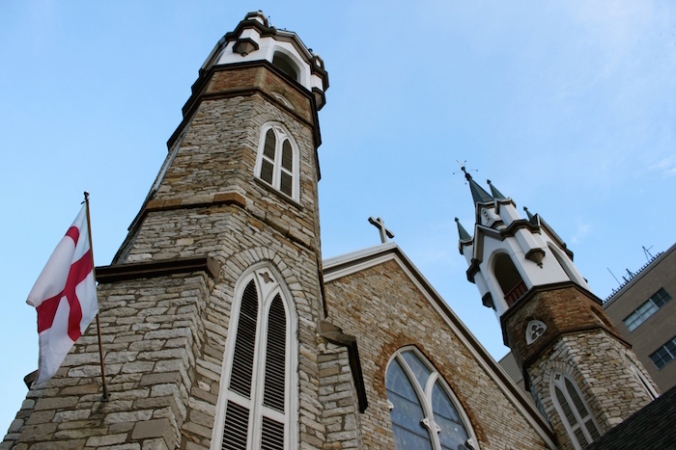
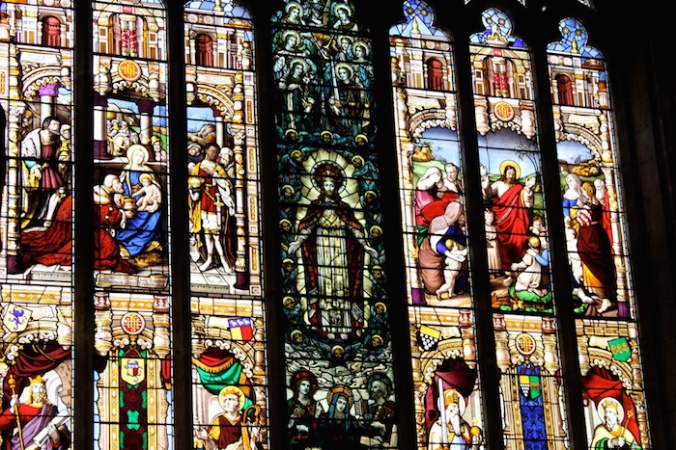
At that time, I had no idea my journey would lead from that gutted-out shopping mall to an old red door. But it did. Today it’s the Eucharist, the stained glass windows, and the liturgies of the Episcopal Church that are breathing new life into my faith.
I’m not alone, either. Lately I’ve been sifting through the stories of fellow travelers like Rachel Held Evans, Jonathan Martin, and Lindsey Harts. We’ve all found something meaningful in the Episcopal Church, something disorienting and comforting all at once, something that feels vaguely like… home.
That’s not a term disaffected evangelicals like me are quick to use. But that’s what the Episcopal Church has become for me: a new spiritual home. Here are some of the reasons for that…
1. The way the liturgy soaks into your being.
The first few times I walked through those big red doors, I didn’t know the code. I didn’t know when to sit or stand. I didn’t know how to use the prayer book. I didn’t know how to cross myself.
While others have sought to make Christianity as accessible as possible, the liturgy of the Episcopal Church feels other, like a strange artifact calling us into a different and slightly foreign reality. Learning the liturgy was like learning a new language.
These days, I’m having to rely less on the prayer book. After months (and now years) of repetition, the words and movements come more naturally from within. Rachel Held Evans described it like this:
At first, the liturgy of the Episcopal Church captured me with its novelty… But we’ve been showing up for nearly six months now, and so it is a different sort of beauty I encounter on Sunday mornings these days—the beauty of familiarity, of sweet routine. I know the order of service now. I know it well enough to have favorite parts, to skim ahead when I’m hungry or restless, to get the songs stuck in my head.
We are products of a culture that demands everything is new and fresh. We frown on repetition and ritual. But these ancient patterns have a way of soaking into your bones. The prayers and songs stay with me throughout the week in a way no sermon ever has.
2. The way the liturgy invites me to worship with my whole being, bridging the false divide between body and soul.
Genuflecting in the aisle. Crossing yourself. Kneeling. Episcopalians worship not just with their hearts or their voices but with their bodies.
Not that it didn’t take some getting used to. It was a few years before I could bring myself to make the sign of the cross. Now I appreciate it for what is: a prayer. It just happens to be one you pray with your body.
And why not? God made us whole persons. We are not disembodied souls stuffed into human shells. We should worship with our whole being. Our heart and soul and flesh should cry out together, as the Psalmist wrote.
It should be said we’re not the only ones who embrace the notion of embodied worship, and our way is not the only way to do so. Pentecostals practice embodied worship when they lift their hands in praise or dance in the aisles. Whole-person worship, as I’ve learned from the Episcopal Church, can be faith-deepening. That’s because, as Elisabeth Grunert once commented, “We learn with our bodies.”
3. The way it anchors my faith when no act of will on my part can.
I don’t always believe the words of the Nicene Creed. But I say them anyway. Sometimes they’re more a confession of desire than conviction, a statement of what I desperately hope to be true.
When I struggle to believe, the rhythms and patterns and prayers of the liturgy are like an anchor. It’s as if the rest of the community—those around me and those who came before me—are saying, “It’s OK. We’ll carry you through this part.”
Faith is no longer dependent on me willing it into being. As Jonathan Martin writes:
With my own world feeling disordered and untethered, I am quite happy to be told when to kneel and when to sit and when to stand. I love that there is almost no space in the worship experience to spectate, because almost every moment invites (but not demands) participation. I have been in no position to tell my heart what to do. But because the Church told my body what to do in worship, my heart has been able to follow—sometimes. And that is enough for now.
4. The way it embraces orthodoxy without rigidity.
The other day my priest (who takes Scripture and theology about as seriously as anyone I’ve ever heard preach), referred in passing to Adam and Eve as our “mythic forbearers.”
No one broke out the pitchforks. There were no murmurs or protests. No angry blog posts. No one accused him of “getting the gospel wrong.”
For many of us, it’s a refreshing change. As Lindsey Harts wrote after hearing an Episcopal homily on God’s sovereignty in relation to the Big Bang, “It was the first time I hadn’t heard the Big Bang being bashed in a church setting.”
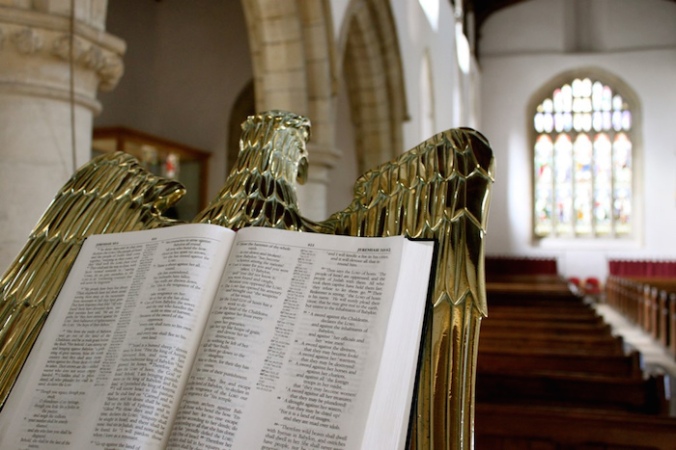
Anglicanism has long been known as the via media, the “middle way” between two traditions. The Episcopal Church has also helped me navigate the middle way between unbelief and dogmatism. Ours is a faith handed down from the apostles, but not one so fragile that it cannot cope with science, with new findings about the origins of the universe, ourselves, or whatever else we might discover.
Ours is not a fear-filled faith.
5. How it makes room for those who’ve been burned out, worn out, or otherwise cast out.
I love how one of my favorite preachers, Jonathan Martin, describes what drew him to an Episcopal church:
I went out of sheer, bold-faced desperation for someone to preach the gospel to me, someone to lay hands on me, and someone to offer me the Lord’s Supper. There was no motivation more noble than hoping to not starve.
A lot of us have burned out on our faith at some point—or been cast out. Maybe it’s because we grew tired of always having to pretend we have it all together. Or maybe someone’s gender or some other part of their identity excluded them from service. Maybe we were told we had to choose between science and faith. Or maybe we were just beaten down by the relentless drum of condemnation.
The Episcopal Church is a refuge, a respite, a place where we can come as we are and learn to receive grace again.
6. The way you can simply be, if that’s all you can do.
You feel it sometimes when you visit a new church. The hungry looks, sizing you up as another potential cog in the church wheel. The pressure to join this program, sign up for that group, volunteer at this event… all before anyone’s even learned your name.
I’ve been part of two Episcopal churches now, and neither one has been like that. They’ve given me space to just be. They’ve let me move at my own pace. To quote Jonathan Martin again, they’ve been places where “I can love and be loved as a human being, without my gifts or my life being commodified in any way.” Or asLindsey Harts put it, “It’s the only place I’ve ever stepped foot into that didn’t seem to expect something of you.”
It’s not that the Episcopal Church won’t invite you to become more deeply connected. They will. But they seem to get that each person is different—and, more importantly, that people are not commodities.
(That said, if you hang around long enough, watch out. They might ask you to join the vestry when you least expect it.)
7. The way their worship can be deeply moving without resorting to emotional manipulation.
When a church tells me how I should feel (“Clap if you’re excited about Jesus!”), it smacks of inauthenticity. Sometimes I don’t feel like clapping. Sometimes I need to worship in the midst of my brokenness and confusion—not in spite of it and certainly not in denial of it.
In contrast to the standard worship formula of so many churches, “the liturgy does not try to coerce everyone into the same emotional experience,” as Jonathan Martinwrites, “but in its corporate unity strangely creates space for us all to have a very personal experience of God.”
Sometimes when you stop trying to manufacture a particular emotion, you stumble into something even more profound and beautiful than you could have imagined.
8. How the “shared cup” matters more than “shared dogma.”
I have spent a lot of my life trying to get my theology right. I’ve spent years believing all the “right things” in order that I might belong. So it was jarring when a good friend explained to me that the sermon (the meat!) was not the center of Anglican worship. It’s the Eucharist, the common table around which we all gather.
We belong so that we might find a common faith together, not the other way around.
Jonathan Martin writes:
The problem in Protestantism in general, historically but much more profoundly now, is that have we far too much emphasis on getting the beliefs right. No wonder we now have over 40,000 denominations—the search for perfect doctrine is endless… At St. Peter’s, we recite the Nicene creed every week. But the practice of the liturgy… and the shared experience of the Eucharist is what holds us together. Beyond that, there is plenty of room for difference. The emphasis is not on sharing dogma so much as it is sharing the cup.
9. The way everyone is welcome as a full participant, even children.
My 4-year-old is welcome at the table every week. She is able to receive the bread and the cup even before she’s made a profession of faith. This sends a powerful message: God’s grace is for her, too. She is no less a part of the body of Christ just because she doesn’t fully understand yet what that means.
One Sunday shortly after our daughter began receiving communion, we were milling about during coffee hour. (If there was a number 12 on this list, it might be coffee hour.) As we were talking with our priest, our daughter began solemnly placing a goldfish cracker into each of our hands. Our priest picked up on what she was doing, and he played along. She was reenacting what she’d just been part of in the sanctuary.
The Episcopal Church is a place that nurtures those first small, occasionally faltering steps of faith—and welcomes the full participation of those who take them.
10. How it reminds me that I’m part of something bigger.
My first real experience of liturgy was in the UK. We lived for a short time in a village an hour north of London, and we began attending the parish church. Every Sunday on our way into the 700-year-old building, we’d walk through the churchyard, past the weatherworn graves of long-dead parishioners who’d prayed in the same pews, whispered the same prayers, and sang the same songs for centuries.
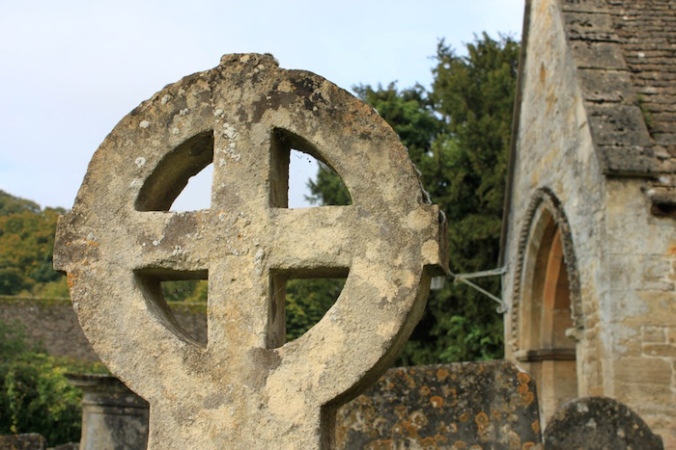
I need to be reminded that my faith does not begin or end with me—that, to quote a comment from Rachel’s blog, it’s “something that you don’t really own.”
11. How at the altar, we’re all the same.
It’s been said the ground is level at the foot of the cross. I don’t think I’ve appreciated that quite as much anywhere as in the Episcopal Church.
At the altar, we all kneel, as Lindsey Harts put it. We all receive what we cannot do for ourselves. We all confess our weakness—that even the gifts we bring were God’s gifts to us in the first place. We all receive the same body and blood.
We need to do a lot better at cultivating and embracing diversity in our midst…but the altar is as good a place as any to start.
—//—
Many of these things can, of course, be found in other traditions as well. But for me, it’s been the Episcopal Church that has nurtured my faith, breathing new life into me. May you find beauty in whatever tradition you call home. May God breathe new life into your faith—wherever you are.
Subscribe to:
Posts (Atom)